Thursday, July 5, 2012

Whistling and fishing with Andy Griffith

The Andy Griffith Show taught me how to whistle.  The opening was my favorite part of the show.  I would perch on the couch in front of our black & white television in anticipation of that infamous whistle.
That opening scene conjured my appetite for fishing.  Opie, Andy’s son, was my age at the time.  My dad worked two jobs – one at the Shelter Insurance Company by day, and another at a nearby school at night. On the weekends he took me fishing, just like Andy did with Opie.
It was the whistling and fishing that kept me glued to the television.  There was something about the boy my age, and the man who was the age of my father, that kept me excited about the next time we’d go fishing on the land owned by my family.  We would load into my dad’s truck and head to McBaine, MO, less than 20 miles from my home in Columbia, MO.  The trip seemed so far back then.
We didn’t talk much.  My dad said you had to remain quiet because the fish are listening.  The first trick was to find the right spot.  I didn’t think much about the heat back then.  The truth is I didn’t really care much about the fish.  It was the time I shared with my dad – just like Opie and Andy. 
I can’t really tell you what the show was about.  I do remember a few laughs along the way.  Most of them had to do with Deputy Fife.  I remember thinking he was silly.  I remember the gun he carried. No bullets, just a gun.  I remember Otis, the town drunk. One day I asked my mama if every town had a drunk.  It seemed odd that he spent so much time in jail. I wondered why they called the housekeeper Aunt Bee when she was the housekeeper.
Mayberry was nothing like my home town.  We had more than one town drunk, and the police carried guns with bullets.  My mom spent time cleaning people’s houses, but they never called her aunt.  It was the whistling and fishing that kept me coming back to the couch.  It was the image of a father and son - alone fishing.  It’s every boys dream.
I remember my first trip to Mount Airy, NC.  It was then that I learned the show was based on Griffith’s life growing up in the small town near the mountain that looks like a woman’s breast.  It seemed odd being there.  It made me wonder about the things missing on the show.  No black people.  No mention of racial tension during a time when the South was embattled over black folks wanting more than a dream and leftovers.  The show failed to reflect the truth of the world near the pond where Andy and Opie caught fish.
You have to smile about that.  Really.  You have to smile.  Little boys like me needed more than explosive images of black children beaten with water flowing from hoses.  There was enough to attack the minds of boys like me who desired the love of daddy.  It’s why I love Andy Griffith.  He taught me to whistle.  He made me think about fishing.
He was just like my daddy, and Opie was just like me.
Thank you Andy Griffith.  This whistle is for you.

Tuesday, July 3, 2012

Is it time for Clarence Thomas to go home?


Can a brother get a redo?  I mean, can we find another black man to replace Clarence Thomas on the Supreme Court?
Don’t take that the wrong way.  I’m way past believing all black people should act and think the same.  I’m all for a person standing autonomous from others.  I can’t throw those stones at Thomas without jeopardizing my on desire to say what I want, when I want and how I want – so help me God. 
We all have the right to speak our mind, fight for our passion and challenge anyone willing to block our independence.  I get that.  Do you brother Thomas.  He has a right to remain stubborn and detached from all things black.  I have no issue with his wife waving the Tea bag flag.  She has a right to fight against big government, and he has a right to believe the man he’s looking at in the mirror isn’t black.
Someone tell him it isn’t so.
His record is clear.  If it looks black, smells black or sounds black – vote no.  That’s his business. 
My problem with Thomas is what he represents.  He’s the only black man on the Supreme Court.  Excuse me for saying it, but that comes with a high level of accountability.  It’s a position that was paid for with blood, jail time, fire hoses and vicious dogs biting kids in the behind.   There’s a history connected to his position, and, sorry to say it, Uncle Thomas needs to honor the legacy of those who came before him.
I know, I know.  I hear the pounding hearts of the critics of that statement. Thomas and his cohorts squabble that the law is color blind.  The responsibility of the high court, they say, is to uphold the law of the land.  I embrace that notion, but wasn’t Thomas placed on the court to continue the legacy of Thurgood Marshall?  Wasn’t it his background in Civil Rights that landed him the gig?
Given why he’s there, you would think that Thomas would evaluate the law from the lens of his cultural identity.  Isn’t that what all of the justices do?  His placement on the court, along with everyone else, is to maintain a balance in the way the law is interpreted.  The law is a fluid business.  Views change in time.  It shifts and turns based on adjustments of public perception.  The law has to be monitored from the context of real lives.  The interpretation of law can’t be limited to the privileged class.
America belongs to all of us.
So, what happens when the black man on the high court doesn’t care about black people?  What are the deeper implications related to not having that voice on the court? Does it matter? Does anyone care? Isn’t the management of the law reliant on those with a deep sensitivity to the voice of those living with the outcomes of those rulings?
Black America needs a redo.  Thomas doesn’t speak for the underprivileged.  He is the most conservative on the high court.  He never speaks.  We always know how he will vote.  He’s an embarrassment to those who know the struggle.  How did it come to this?  We want to be proud of Thomas.  We can’t.  We can’t be proud of one who hates his own people. 
How can I say that?  Look at the way he votes.
He has every right to be a conservative.  I support that coming from anyone standing on American soil.  It’s why I love being an American. We have that as a right, but this is not about individual rights.  This is about his responsibility as a member of the Supreme Court.
If he refuses to be considerate of how the law impacts the people he has been placed on the court to represent, go home.  Go home and live your life of privilege.  Go home and fight for a more conservative government.  Run for office.  Become more vocal.  Do that. Have fun with believing America will be better due to those views.
But, don’t use that coal black hue to step into that privilege while claiming you climbed the mountain on your own.  You got there after Martin’s dream.  A. Philip Randolph organized to help get you there.  Don’t forget sister Sojourner and Mary McCloud Bethune.  They paved those streets you now walk on every day.  They paved them with tears and suffering.  They marked the territory that you assume belongs only to you.
Yes, I want a redo.  This dude refuses to get it, and it’s time to stop pretending.  You don’t belong to us, so stop acting like you’re part of the family.
We kicked to you out when Anita Hill spoke truth.
Go home.

Monday, July 2, 2012

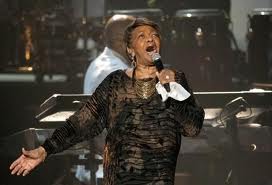
Cissy Houston takes BET Awards to Church with tribute to Whitney


Someone needed to spank them for all that foul language.  Didn’t they have sense enough to know America was watching?  Don’t they know children look up to them?
It took the diva of Gospel Music to send them to the woodshed for an old fashioned whipping.  It was the type I used to get when my mama got tired of my trifling ways.  “Go in the back and pick out a switch,” she would say. “It better not be a little one.”
It's part of black folk ritual that is shared by all with a black mama who told you to come home before the street lights come on.  Come home late and prepare get a few licks for failing to abide by mama’s rules.  Some of the performers at Sunday’s BET Awards needed to be schooled on old time ways.  The language was so bad that entire performances were censored. 
Enough was enough.  The queen stood up and reminded them of big mama’s ways. “We need all of ya’ll,” Yolanda Adams started.  You could feel the spanking coming. “I’m saying the world needs everyone in this room.  Please make sure that you use your gift responsibly, ‘cause we’re watching.  Our babies are watching, and they want to be like us.”
Amen sister!  Call them to task for forgetting they’re on national television and viewers from around the globe are taking notice of how they act in public.  Tell them to act like they have some home training.  Tell them not to make the family look bad and to remember babies are watching them.  Tell them not to forget that the Lord has blessed them to be on stage.  You better tell them sister!
Sister Yolanda went there after Rick Ross performed with his Maybach Music Group and Nicki Minaj’s performance and acceptance speech for her third consecutive best female hip-hop artist award.  Being thug was on display.  What was up with that?  Did someone send out a memo to put in motion a competition for best display of obscenity during a national broadcast?
The actions of a few distracted from the highlight of the night – Cissy Houston singing her heart out in memory of her daughter.  If you didn’t cry after that, God help you.  It was a call to worship.  It was a moment of praise and worship.  Yes, Mama Cissy took us to church.  Mariah Carey, Monica, Chaka Khan, Brandy and Gary Houston, Whitney’s brother, joined the worship experience.  Members of the cast of Waiting to Exhale – Angela Bassett, Lela Rochon and Loretta Devine – added a tribute to the fallen angel. 
It was one of those special moments that black folks do best.  It’s one of the great contributions that we, as a people, bring to this great union we call America.  We know how to bring faith to the forefront.  We blend our faith in all we do.  The song may not come from a Gospel label, but faith will ooze out if you give it a chance.  Sunday’s stage was set up to worship God for Whitney’s life.  Others have done the same.  This was not the Academy Awards or one of the other award shows.  It was the black community’s time to bring God on stage and lift Whitney up in a way that reflects more than her music.  Can the church please say Amen?
It was appropriate for Queen Yolanda to speak.  Shut up all that noise.  Honor this moment children.  Don’t you know the babies are watching?  Don’t you understand to whom much is given, much is required.  More than that, listen to me now, don’t you know God is watching?
It’s a lesson that some can’t hear due to their obsession with being seen and heard.  There are those moments when you have to bow to a higher will.  The will is a purpose beyond your claim to fame and fortune.  Bow to the voice that touched us, moved us with both lyric and passion.  Remember the tears that enthused so many to sing.  Remember the force of that song The Greatest Love of All. How many were moved by that?
God was in that voice.
Stop all that cursing and remember what God has done for you!
One more thing children – don’t limit it to one night.  Act like you know who holds you up.  That’s what mama taught you. 
I wish they would listen.

Friday, June 29, 2012

Allison sounds like a Koch brothers puppet


Darrell Allison makes school vouchers sound like the best thing for black folks since Abe Lincoln signed the Emancipation Proclamation.  He even quotes Cory Booker, mayor of Newark, N.J., to get people behind his school choice campaign.
“When people tell me they’re against school choice…I look at them and say as soon as you’re willing to send your kid to a failing school…then I’ll be with you,”  Allison quoted Booker in a quest column that appeared in the Durham Herald-Sun.  Allison used the message of the popular mayor to lobby support for House Bill 1104, the N.C. Opportunity Scholarship Tax Credit Program.  The good news is his pitch failed - at least for now.
It was unable to get out of the Senate Finance Committee.  Allison and other backers of the proposal say they’ll be back like Arnold said in the second Terminator movie.
The program would have allowed corporations to pour funds into nonprofits that would provide scholarships of up to $4,000 per student.  In return, those corporations would receive tax credits allowing them to divert up to $40 million of their state taxes.  Supporters claim the plan would improve the quality of education of poor students, but don’t be fooled.  This is a scheme to drain money set aside for public education to benefit private schools.  It’s a plan set in motion by the American Legislative Exchange Council, a group funded by the Koch Brothers.
Charles and David Koch are the billionaire brothers who have taken the fortune they’ve made by selling toilet paper and other paper products to shape the way people think.  They have funneled money into a network of foundations, think tanks, front groups, lobbyist, advocacy organizations and GOP lawmakers to push their libertarian views.  They hate government, taxes, environmental protection and public education.
Don’t blink folks.  The Koch brothers have been busy in North Carolina. The Huffington Post reported earlier this year that the brothers have funded efforts to keep 21 million Americans from voting as their money helped write and propose voting suppression bills in 38 states.  American for Prosperity, a Koch brothers’ front group, fought to remake a model school diversity policy in Wake County.  They have given more than $14.39 million in grants to over 150 universities in return for requiring some universities to hire candidates who adhere to their views.
The brothers have more than enough money to fund the libertarian revolution.  Koch Industries, headquartered in Wichita, Kansas has annual revenues estimated to be a hundred billion dollars.  The siblings operate oil refineries in Alaska, Texas, and Minnesota with more than four thousand miles of pipeline. They own Brawny paper towels, Dixie cups, Georgia-Pacific lumber, Stainmaster carpet and Lycra.  They are ranked by Forbes as the second-largest company in the United States. The Koch brothers have a combined fortune of thirty-five billion dollars.
The Koch brothers have already proven an interest in North Carolina affairs.  Look close and you may find a tie to Parents for Educational Freedom in NC, the group led by Allison.  Considering the Koch brother’s agenda and their goal to unseat Barack Obama, it is curious that Allison would use Cory Booker, a staunch Obama supporter, to plead his case.  Like that Sesame Street song, one of these things doesn’t belong with the other.
Allison spews rhetoric like a Koch brother puppet. “The N.C. Opportunity Scholarship Program is needed because more than 336,000 poor kids failed end-of-grade tests last year, according to the state Department of Public Instruction,” he wrote in his Herald-Sun quest column. “This staggering number represents more than a quarter of all traditional public school students. Equally alarming is that in Durham County, only 33 percent of poor students passed end-of-grade tests over the past five years compared to nearly 70 percent of their wealthier peers, according to DPI.”
Allison, like the Koch brothers and the rest of the anti-public school clan, assume their alternative schools will do better at preparing poor students.  It fits well within a culture that has parents afraid to risk their child’s education.  It’s a message those Koch brothers have tossed enough to convince people to buy into their libertarian message.  There’s just enough truth there to convince enough people to take a nibble. I’m not biting.
No more taxes, down with the EPA, get rid of the Department of Education and forget all that hard work and marching that led to integrated schools.
Don’t drink the Kool-Aid folks.  Those rich dudes have an agenda, and it certainly isn’t about poor, black children.

Thursday, June 28, 2012

Supreme Court rules on Obama Care: The fear of not enough


“I can’t believe they gonna force everyone to pay for health insurance,” a customer at the Bean Traders fumed after hearing the Supreme Court upheld the individual requirement of President Barack Obama’s health care plan.  “Why should I have to pay for other people’s insurance?”
It’s that sentiment that stirred a group of discontented citizens to rekindle memories of tea being cast into a lake. All that talk about taxation devoid of representation took on new meaning after Obama started pressing to cover the more than 30 million Americans without medical insurance.  The popular cry of leave my money alone was closely followed with let the states decide for themselves. 
The lobby for less government intervention has been trapped in the complicated grip of massive pain felt by those who require not less, but more.  American consumers seem obsessed with avoiding responsibility for the ills of their neighbors. It’s not that Americans don’t care; the concern is they don’t have enough to carry their own load.
The debate on universal health care has been that line in the sand pitting critics of Obama against those standing with a glimmer of hope.  The detractors of Obama Care pitch a message of government intrusion fueled by a series of bailouts.  Not only has the government taken more money out of our paychecks, it’s been used to fund a corrupt banking system and failing auto industry.
So, the country has been waiting for the Supreme Court to rule on the matter.  Most of us didn’t trust the courts ability to rule beyond political ideology.  Many expected to ruling against Obama’s health plan.  We expected it to be used against Obama to validate those claims that he’s a socialist hiding in a capitalist system.  He’s not really a Christian.  He’s not really an American.  Many of those throwing that tea in the lake insist Obama is more space critter than human, and waves his hand in a Nazi salute reminiscent of Hitler.
This vote is about the heartbeat of the nation.  It’s about the war of ideas that conjures battles resembling the pre-Civil War rhetoric.   The fight to define state rights coupled with the plea to get the government out of citizens pocketbook are the weapons on the battleground to name Americas agenda.  Will we place the need of others above our own, or is there enough left to share with those pinching pennies to make a nickel.
The wail of the customer at the Bean Traders reflects his own struggle to survive after the economy collapsed.  His dream for better days eroded after his business went belly up due to the crumpling of the companies who fed his business.  Once his business was sold his health went bad.  He’s getting older.  His savings have eroded.  One bad thing was followed by another, and now he doesn’t know how to pull out from under all that happened.
He feels what so many others live with everyday.  Fear.  Fear of the unknown.  Fear of not having enough.  Fear of more money taken out of his check to take care of people he doesn’t know.  When will it stop?
Then there are those living on the other side of the need.  More than 30 million Americans live with it every day.  They too have lost work.  The difference is they can’t go to the doctor.  They live with having to bite the pain of sickness and pray that it won’t kill them.  They walk with sickness on their way to the next job interview.  Many die because they can’t afford medication.  Some die not knowing they could have lived if they had gone to a doctor.
Both truths coexist in a way that leaves us all frustrated with the options we face.  We use labels to define those who are afraid of tomorrow.  Aren’t all of us scared a bit?  Aren’t both Democrats and Republicans responding in some level to fear?  Aren’t we all afraid about not having enough and that even more will be lost along the way?
The Supreme Court decision on health care is about fear.  In the face of all that fear the ruling forces us to consider how the poor health of others impacts our own health.  Health, like so much that falls within the purview of government control, works best when taken out of the hands of corporate control.  As much as we hate to admit it, access to good health is ruled by one’s ability to pay for it – those with have, those without die.
Good health is important enough to force people to have health insurance or pay a penalty.  Some have stated that a person should be allowed to die if they don’t have insurance.  Pull the plug.  Kick them out of the hospital.  Force them to get a job that offers a benefit package.  It’s their problem. It’s not my business.
That’s not the America we love so much.  Fear forces us to consider what it means to have to pay for another person’s inability to pay.  Our obligation as “one nation united for all” rouses a collective consciousness to be our brothers and sisters keeper.  We may be scared, but this we must fix.
We can’t let them die.

Tuesday, June 26, 2012

Turn left on Andre' Leon Tally Road

I came close to driving my car into the tree when I saw him walking.  His tall frame formed a shadow.  The shade fashioned a sacred space for those aware of his contribution.  Sadly, no one knew his name.  No one knew his contribution.  They ran around him as he made his way around “the wall’ surrounding Duke’s East campus.
“That’s André Leon Tally,” I screamed as I yanked the wheel to the left to avoid crashing into the car in the right lane.
“Who’s that,” the duet n the car responded in a way that implied so what.
It hurt me that no one knew his name.  It hurt even more when I discovered Tally is a Durham native. He graduated from North Carolina Central University before heading to Brown University where he received a Master’s degree in French. 
Before writing more about Tally’s work, I have to ask.  Do you know him?  I’m willing to bet you don’t.
Tally moved to New York to become Andy Warhol’s assistant before becoming the most influential person in the fashion industry.  He’s editor-at-large for Vogue Magazine and gets front row seating at top fashion shows in New York, Paris, London and Milan. Tally made a cameo appearance in the 2008 movie Sex & the City and advised Michelle Obama on fashion before connecting her with Jason Wu.
Many claim the character Meryl Steep portrayed in the movie The Devil Wears Prada is loosely based on Tally.  In fashion, he is larger than life.  In Durham, he’s just a black dude walking around “the wall’.
Maybe it’s Durham’s small town ways that draws Tally back home from time to time to take those brisk walks around “the wall”.  As tempted as I am to run up to him and make a formal introduction, I don’t want to be perceived as a groupie.  Yes, I’m a recovering label whore.  I would love nothing more than to have a suit tailored by Ozwald Boatang.  Those who have read Backslide, my second novel, know my spiritual battle with all things high class juxtaposed against my fight for the poor.
To say that Tally is the king of fashion is an understatement.  He is “the man”, and Durham is his home.  I never hear mention of his contribution to fashion during that 28-day period set aside to celebrate black history.  There should be a street named after him in Durham.  Maybe then people will get to know his name.
Come to think about it, that’s how we treat the people who have made noteworthy contributions in their field.  Yes, we are quick to make mention of those who helped build Durham’s Black Wall Street.  We have buildings named after them to help us remember how they paved the way.  What about the vast others who were born in Durham or made Durham their home?  Shouldn’t we find a way to say look at what came from the place we call home?
I propose we start renaming streets in Durham.  Certainly there are enough that deserve a name change.  I have a long list: John Hope Franklin Blvd., Pauli Murray St., Shirley Caesar Rd., Zora Neal Hurston Parkway, John Lucas Freeway, Ernie Barnes Circle, Leroy Walker Rd and Nnenna Freelon St.  There are others on my list.  The contributions are vast, so don’t get mad at me if I left someone off the list.
Shouldn’t our street names reflect more than the contributions made by a few dudes named Duke, Mr. Watts, Mangum and our close proximity to Chapel Hill? A drive around the city leaves one hard pressed to find places that celebrate those who grew up within walking distance from those tobacco warehouses.
Thus begins my official campaign to rename streets in Durham.  I’m calling on the city council to pick a few streets and get the show on the road, or should I say road signs? Think about it.  How inspiring would it be to have streets named after the black men and women who make us proud to live in Durham?  What would it mean to honor a few of those living legends – Lucas, Caesar and Freelon – by giving them their roses while they are still with us?
Yeah, that’s André Leon Tally walking around “the wall”.  You may not know what he looks like, but it would be nice if people knew his name.
Turn left on André Leon Tally Rd. It’s the street after you pass the Hayti Heritage Center. Then turn right on Ernie Barnes Circle.

Monday, June 25, 2012

Legitimate black man kicked out of bar


Headlines are written to draw readers to the article.  They serve as a summation of what follows and entice us to give the piece a chance.
Like most readers of news, I depend on headlines to help me weed through the massive choices in front of me.  Many headlines let me down after promising a sensational discovery only to deflate me after presenting news that fails to live up to the billing.  I got hyped after reading “Hip-Hop Mogul indicted on murder-for-hire charges”.  The headline lured me in because of a false assumption.  Had authorities finally arrested Suge Knight for the arrest of Tupac?
Nope. It was James Rosemond who was charged in New York for ordering others to kill a man in 2009 as payback for an assault on his 14-year-old son.  Rosemond is best known for his work with Salt-N-Pepa, Big news, but it’s not Suge Knight.
That headline served its purpose.  So did the one I read from happenings over in Raleigh, NC.  “Harvard graduate student thrown out of bar in North Carolina allegedly for being black” Those were fighting words.  It was just enough to get my blood churning.  I’d had enough of black men being treated wrong, and this one had me overly sensitive because it happened less than 25 miles away.
That’s the first thing I wanted to know.  What city was it?  My assumption was correct.  It happened in Raleigh.  I can’t imagine something like that happening in Durham, NC.  Not after being voted the most tolerant city in America by The Beast. The bars in Durham are a haven of multiculturalism.  No one in their right mind would kick out a person because of their race.  With that being said, I couldn’t make that assumption.  I’m still not over the burning of three crosses in one night in Durham.  Anything is possible.
After confirming it happened in Raleigh, I read the rest of the story. “What was so demoralizing about this reality is that I have worked to do everything right,” says Jonathan Wall, a 21-year-old graduate assistant at the University of North Carolina at Chapel Hill.  Wall is a graduate of Morehouse College and is set to begin graduate studies at Harvard.  He has played by all the rules.  That statement from Wall, and the headline that flushed out the power of all that hard work, had me thinking about what made this a big story.
It’s the Harvard in the headline that brought legitimacy to his claim.  The more I thought about it, the more I envisioned a more honest headline.  How about “Legitimate black man thrown out of bar.”
We shouldn’t minimize Walls pain.  From all accounts, something went array that night.  Wall says he and a friend went to The Downtown Sports Bar and Grill on a Sunday morning.  It was only his second time in a bar.  Wall smells squeaky clean.  The type of kid a father would introduce to his daughter – educated, motivated and he isn’t one to spend time in a bar.
They were told they couldn’t go in because the bar requires membership. Somehow he made it inside, and was quickly confronted by the general manager who told him to buy a drink or leave. Wall explained he was waiting for a friend to use the bathroom when he says the general manager put him in a headlock and forced him out of the bar. 
Wall told a police officer on patrol in the area about the incident, but no report was filed. The bar denied Wall’s claims in a statement released to the press on Friday. “Mr. Wall was not roughed up or improperly treated.  Mr. Wall was not the subject of racial discrimination,” according to the statement.   It continues to state that Wall “took advantage of a crowded door situation after being told he could not enter without being a member or the guest of a member.”
I kept looking for evidence to prove that Wall was kicked out because he’s black.  I searched for a racial slur, a comment about your kind of people, anything to give credence to the claim that he was removed from the premises because of his race.  I’m down for the protest.  I have a new pair of we shall overcome shoes ready to take to the streets and march.  I couldn’t find it in the story.  As bad as I feel for Wall, and I sincerely do, there is no evidence to validate his claim that race was the motivation behind all that happened.
That’s not to say it’s not about race.  Wall is probably correct to assert that the headlock and boot came from an ole hillbilly with built up racial anxiety.  The only way to measure things like this is to walk in those shoes.  It’s often what isn’t stated that gets at the truth.  It’s how things are done that leave people like Wall thinking there’s an underlying thing going on in the midst of the battle.  I feel you dude.
But, there are deeper implications related to what makes this news in the first place.  It’s what Wall said.  It’s what is stated in the headline that got me invested in the story: “Harvard graduate student thrown out of bar in North Carolina allegedly for being black”.  After playing by all the rules Wall, and others like him, have the right to be treated with dignity and respect. How dare they treat him that way! He’s not just a black man, he’s a black man headed to Harvard.
Let’s face it.  This would not be news if Wall was a student at Shaw University or St. Augustine.  The headline failed to mention Wall is a graduate of Morehouse.  Harvard brought credibility that the HBCU couldn’t.  The use of Harvard forced everyone to stop and ponder the rest of the story. Sadly, that's what it takes to be heard, the validation of an institution that you’re not a loud mouth black dude who blames white people for all the wrong in your life.
Would the story get headlines if the man choked has a GED, is unemployed, has two baby mama’s and is two months behind in child support?  It’s the saddest part in covering the news regarding black men.  Their credentials end up in the headline as a way to confirm or deny the credibility of their claim. 
It’s difficult to respond to Walls assertion of racism.  Unless there’s more to this story, I’m forced to reserve the use of my race card.  That doesn’t mean I can’t feel my brother’s pain.  I do.  I want to fight for him.
I want to fight, but not because he’s black.  I want to fight because he’s a black man headed to Harvard.  He played by all the rules darn it.
Bow down and show respect for a man like that!  But, what about the dude in the chokehold with a GED?

Thursday, June 21, 2012

The meaning of shackles on my feet


Please excuse my language, but what the Hell was Adidas thinking when they introduced the shackle shoes?  I’m not buying the line “Got a sneaker game so hot you lock your kicks to your ankles?”
It’s hard to imagine that in this age over hyper cultural sensitivity not one person at the German sports apparel maker considered the correlation of those shackles and the enslavement of black folks.  Not one person? No one had the insight to blow the whistle in the middle of the presentation and call a foul? Nobody?
The implications related to not knowing any better raises serious question regarding who was in the room when the shackles were presented.  I can only assume there was the absence of a black person to scream “no you didn’t!”  If so, that brother or sister needs to have the black card removed and sent to a class on what pisses other black folks off.
Someone needed to yell about the large numbers of black youth who purchase those high price shoes.  I know young people with enough invested in shoes to pay for their college education.  I’ve heard young people scream at their parents for refusing to purchase the most recent version of Jordan’s foot crack. Youth are addicted to shoes like an old wine-o standing on a corner begging for change to get another bottle.  “Please mama, please, got ta have my shoes!”  Show me a parent not dealing with the insanity connected to a kid’s shoe addiction and I’ll give them an award as parent of the year.
Which may be the point behind Adidas shoe concept – telling the truth about those who fork out all that cash to buy the crap.  As much as I want to strangle everyone in the board room who gave the nod for the shoe, I have to give them credit for being honest about the lure of the shoe industry.  Those who buy their products are slaves to the shoe.  You might as well put a shackle on them to make it official.
And it goes deeper than the shoes they wear.  Their dreams for education and a life of a modest level of security are enslaved by their spending habits.  Their parents can’t get past making it from one check to the next due to their need to show up at school with new kicks on their feet every day.  Add to the cost of shoes the rest of the wardrobe.  You might as well call them what they are – slaves.
As much as I hate the concept of shackles on shoes, there’s something about that memory from slavery that gets at a truth that needs to be preached.  Since they want to wear them, put shackles on them.  Make them walk around school with a symbol of subjugation.  Make them tell the truth about their obsession. 
Outrage on the release of the shoe forced Adidas to offer a formal apology. "The design of the JS Roundhouse Mid is nothing more than the designer Jeremy Scott's outrageous and unique take on fashion and has nothing to do with slavery," the statement said. "We apologize if people are offended by the design and we are withdrawing our plans to make them available in the marketplace."
Adidas had no choice but to back down.  With high profile critics like Rev. Jesse Jackson banging at their door they had to find a way to back out of their plan to place shackles on the feet of youth. "The attempt to commercialize and make popular more than 200 years of human degradation, where blacks were considered three-fifths human by our Constitution is offensive, appalling and insensitive," Jackson said before Adidas' decision to withdraw them from the marketplace.
I’m certainly relieved that Adidas pulled the shoe, but maybe this was an opportunity to make a point to those black kids fixated on shoes.  We had a chance to force them to wear a label like in the “Scarlet Letter”. Make them tell the truth.
I wear shackles on my feet because I’m a slave to my shoes.

Tuesday, June 19, 2012

Rodney King: a name we will never forget


There are so many emotions stirred by the death of Rodney King.  There’s the usual stuff that rises to the top whenever I hear his name.  I get pissed off because his name reminds me of every time I’ve been stopped by the police for no other reason than driving while black, walking while black or shopping while black.  His name reminds me of why I pray every morning before stepping out into the real world.  As much as people refuse to admit it - it’s tough being a black man in America.
Black men have to be careful with how we talk about race.  We get accused of using the race card or living with a victim mentality.  People are quick to challenge us to pull up our pants by our bootstraps and take responsibility for what we have done to limit our own progress.  We’re told that others struggle just like we do, and that it’s not our black skin combined with manhood that causes all the hostility others have toward us; it’s our attitude blocking progression toward that American Dream.
Rodney King is one of the many reminders of what happens when black men show up.  Other example can be found: the Jena 6, Trayvon Martin, the harassment of Harvard Professor Skip Gates by police when he was unlocking his front door, the conviction of Brian Banks for a rape he didn’t commit, the wrongful conviction of Daryl Hunt for the death of a Winston-Salem journalist and the conviction of Mumia Abu Jamal for the death of a Philadelphia police officer.  When a black man is arrested the first thought is he’s guilty until proven innocent.
The uproar that followed that release of that dreadful tape, that showed Los Angeles police beating King with their clubs, was stirred by years of police brutality. Complaints by citizens weren’t enough to convince authorities to change the unwritten code that gave a green light to beating black men expected of wrongdoing.  The riots that followed reflected a community's pay back for being fed up with being used as beating boards. 
When King came out and begged the world to “just get along,” his tone and face said more than his words.  53 people were dead after those riots, and the nation had become even more torn by race.  Black people were incensed by the notion that black men deserved to be beaten, like former slaves, for minor acts of disobedience.  Like the burning of Watts in August of 1965, it was in retaliation to police brutality.  Enough is enough.
Few know the name Marquetta Frye, the 21-year-old black man pulled over by a white California Highway Patrol motorcycle officer.  Frye was arrested and by midnight 13,900 people were in the streets protesting.  Watts went up n flames, but few know Frye’s name.  Few don’t know King’s name.  That name, Rodney King, is synonymous with police brutality.
King’s drowning in his home pool won’t change any of that.  His name will be remembered because he provided the evidence the black community needed.  It showed up on tape.  It couldn’t be refuted.  It was no longer the word of the police against that of another black man griping about the abuse of power.  It was there for the world to see.  After the nation watched, the conversation regarding police brutality shifted.  It no longer became a figment of the black community’s imagination, it was there to watch.
Rodney King’s body was sacrificed to uncover truth.  The $3.5 million King received to compensate him for the blows on his body helped heal the ache of that night.  The money paid for the brutality, but there are some things money can’t make go away.
No matter how much money a black man has in the bank, it’s not enough to avoid the suspension of those who assume him guilty for no other reason than the color of his skin.
Ask Skip Gates.

Friday, June 15, 2012

I celebrate my Independence Day on Juneteenth


I refuse to celebrate the 4th of July.  I recognize it as a significant date in American history.  I understand why people gather for cookouts, wave flags and meet at the ballpark of fireworks.  It’s up there with hotdogs, apple pie and baseball as things that define what it means to be a citizen of the county that waves the red, white and blue.
I still refuse to celebrate that date.  It would be a lie to do so.  It denounces all that followed that day when a group of men came together to make it official – we became a nation free from the rule of England.  My folks weren’t free yet.  I simply can’t force myself to commemorate a day that fails to tell the rest of the story.
I celebrate my independence on June 19th.  That’s the date set aside to remember the end of slavery in America.  It was on June 19, 1865 that the Union soldiers, led by Major General Gordan Granger, landed at Galveston, Texas with news that the Civil War had ended and that the enslaved were free to leave master’s rule.  It was two and a half years after President Abraham Lincoln’s Emancipation Proclamation announced the freedom of slaves on January 1, 1863.
The Emancipation Proclamation had no impact on Texas due to the small number of Union troops to enforce Lincoln’s Executive Order.  With the surrender of General Lee in April of 1865, the arrival of General Granger and his troops were enough to overcome the resistance in Texas.
That’s the day I celebrate independence.  On that day General Granger read General Order Number 3 to the people in Texas.  It began with:
"The people of Texas are informed that in accordance with a Proclamation from the Executive of the United States, all slaves are free. This involves an absolute equality of rights and rights of property between former masters and slaves, and the connection heretofore existing between them becomes that between employer and free laborer."
Many slaves left before the order was affirmed by their former masters’. With nowhere to go, they left embracing their freedom. Some went North while others sought to find family members in neighboring states.  They fled to Louisiana, Arkansas and Oklahoma.  Since that day in June of 1865, people have paused to remember the struggles of their descendants.  The Juneteenth celebration remained vital in Texas decades later, with former slaves and descendants making an annual pilgrimage back to Galveston.
When Ralph Abernathy called people of all races, creeds, economic levels and professions to come to Washington, D.C for the Poor People March in 1968, many returned home and initiated Juneteenth celebrations. On January 1, 1980, Juneteeth became an official state holiday in Texas.
The Durham Juneenth celebration is organized by Phyllis Coley, publisher of Spectacular Magazine and NC State Juneteenth Director.  Coley has been pressing state legislators to recognize Juneteenth as a state holiday. 
People will gather on Saturday to hear local music, enjoy food and hear speeches.  The keynote speech will be delivered by Rev. William Barber II, president of the North Carolina NAACP. Barber will talk about the importance of voter registration and remind people to show up and vote during the fall elections.
The Danish Philosopher Soren Kierkegaard says that life must be lived forwards but can only be understood backwards.  The reality of a particular age may not become apparent until it is drawing to a close. The meaning of that day in Galveston, Texas was not fully understood by those who walked away from a life of subjugation to embrace freedom.  We look back moved by their determination to find meaning beyond what kept them in bondage.
It’s my Independence Day.  I wave this flag of truth.  Lest those who follow from behind forget, we remind them on Juneteenth.
We free now.

_______________________________________________________________

Eighth Annual Durham Juneteenth Celebration
WHEN: June 16, 1 to 10 p.m. 

WHERE: CCB Plaza, downtown Durham

ADMISSION: Free

_______________________________________________________________

Saturday’s Juneteenth entertainment schedule:

1 p.m. Opening ceremony

1:15 p.m. King Ayoola

2:05 p.m. Tones of Harmony

2:40 p.m. Fierce Eclipse All Stars 

3 p.m. Q.S. Bullock & Sacrifice

3:35 p.m. Solo acoustic guitar

4:05 p.m. AIDS awareness session

4:30 p.m. Jerome Waller & Anointed Praise 

5 p.m. William Barber II, keynote address

5:30 p.m. DJ Kool

6:30 p.m. Models against domestic violence

6:50 p.m. Kamus

7:05 p.m. Reggie Pr1me 

7:30 p.m. Yolanda Rabun

8:15 p.m. Johnny White & The Elite Band

9:05 p.m. Sybi