Monday, October 1, 2012

The Durham Committee on Affairs of Black People endorse Omar Beasley instead of Fred Foster


In a move that shifts conversations related to the upcoming election for Durham’s Board of County Commission, the Durham Committee on the Affairs of Black People has endorsed Omar Beasley over Fred Foster.  Beasley enters the election with endorsements from the DCABP and the Friends of Durham, while Foster is left depending on the strength of the People’s Alliance to win a seat on the board.
The DCABP also endorsed incumbents Michael Page and Brenda Howerton, but failed to give a nod to two candidates to fill the five seats on the commission.  There was speculation that the DCABP would endorse Wendy Jacobs as a compromise for the endorsement of one of the black candidates they supported.  That became complicated once leaders within the DCABP moved to support Beasley over Foster.
The People’s Alliance also endorsed only three candidates for the Board of County Commissioners – Foster, Wendy Jacobs and Ellen Reckhow.  The People’s Alliance website clearly states the agenda of the PAC. 
“In the Durham County Commissioner race, the threat to progressive values is not from Republicans, but from candidates who are beholden to shadowy developer super-pac money and who are not reliable on equal rights for gay and lesbian people,” the website states. “PA-PAC encourages you to override your straight democratic vote in this race by voting specifically for Foster, Jacobs, and Reckhow only. This will not affect your straight ticket vote in other races. You will still need to FLIP YOUR BALLOT and vote for progressive Judges. This is the best way to secure a progressive Durham, a progressive North Carolina, and a progressive United States.”
Those comments have further alienated Durham’s black leadership, and have seriously impacted the possibility of future collaboration between the two PAC’s.  In assuming ownership of Durham’s only authentic progressive voice, the PA has entered a war zone that may shape politics in Durham for years to come.
The loser in the war is Foster, who lost his endorsement with the DCABP due to his allegiance with PA. It was logical to assume the DCABP would endorse the four black candidates, with the assurance that Foster would win due to the endorsement from both the PA and the DCABP.  The PA rolled the dice on posting comments that labeled the DCABP in a way that negates the history and mission of the group.  Put another way, those were fighting words.
Given the lack of support from the DCABP, Foster will be hard pressed to win in a Presidential election.  The DCABP will not struggle with getting blacks out to vote, and many will lean heavily on the endorsements of the DCABP in selecting members of the commission.  In addition to the support of the DCABP, Beasley benefits from the endorsement of the Friends of Durham.
By making this election a one issue race, the PA has dug a ditch that may be hard to climb out from under over the next few years.  They have developed an adversarial relationship with the DCABP.  They have claimed ownership related to what defines a progressive political agenda.  They have spread rumors of commissioners getting paid by developers, making decisions to support the 751 project about personal gain versus how candidates feel about the project.
They have attacked the character of candidates and the credibility of an organization that has served Durham as the voice of black people.  They have bullied the process by refusing to compromise, and have used Foster as an example of legitimate black leadership.  They assumed he would be endorsed by the DCABP, and that he would serve in promoting their agenda.
The DCABP people took that away by endorsing Beasley over Foster. Now it’s strength versus strength.  It all comes down to who can get out the most votes now – power versus power.  Maybe the PA likes their odds, but something tells me they barked up the wrong tree.
Compromise could have saved the day, but folks on the PA closed the door by defining what progressive looks like in Durham.
Who wins in this type of battle?

Friday, September 28, 2012

27 Views of Durham: Missing in the room


I sat waiting to read a brief section from “Home is a Cup of Coffee” the short story I wrote in the book 27 Views of Durham.  The room was packed with people who take pride in calling Durham their home.  I was surrounded by people I love and respect – Barry Yoeman and John Valentine.  Connie sat behind me. I could feel her love pressing me to represent the voices of those I write about.
I closed my eyes and took deep breaths before taking the stage. The room was dark.  Tension brewed after I consider the glasses I wore, old ones used after the most recent were damaged.  The prescription is wrong. I hope I can see the print, I thought as I stepped to the microphone.
I saw no one when I read.  No one.  It was a fitting moment due to who was absent.  They joined me on the stage as I began reading about Stick, a character made up to symbolize the homeless men and women in Durham. I began reading…
I couldn’t stop thinking about Stick. Everyone on Ninth Street knows him by name. A black man in his early fifties, Stick is part legend and part man to be pitied.  His hair and beard is covered with gray, giving him the appearance of one much older. His fashion reflected all things given, yet chosen with care.  The bold colors often clashed.  The purples and greens and blues wrapped his body like a Soul Train dancer. His style begged attention.  His walk said even more.
His walk was trapped in an age were cool was bold colors and footsteps danced like James Brown getting down to one of those funky beats.  Stick talked slow like his words were set in motion to spit rhymes. His head nodded when people passed on their way to a mocha release.  Stick is old school cool aching to play with new school dreams.
Every homeless person has a story.  His is one joined to the tragedy of consequences.  Those old school ways caught up to him in a way that took his mind on a journey, a one way ticket.  He hasn’t been able to find his way back home. The game of memories became a war for sanity.  He lost the war long ago.
I walked off the stage.  There is more to the story. The layers of agony that went into writing “Home is a Cup of Coffee” came to the surface as I took my seat.  It’s a story about finding a way home after consequences rob a person of the strength to move forward.  It was more than a story about Durham, it’s a story of the lives of the people who grapple with life in Durham.  It’s not a story about a place.  It’s about those who can’t find a place.
I dreaded they were not in the room.  They never are in the room.  They are isolated for those who take pride in living in a city named for its bullish ways.  They are unable to embrace the transformation from a community known for textile mills and tobacco to one adored for diversity.  They didn’t fit among a mass of people content on celebrating the home town team.
They remain in the cold.
“Where are the black people,” Connie asked as we approached the car after the event.
“This is not their Durham,” I responded.  “For those who celebrate Durham, this is what their diversity looks like.”
Connie dropped me off at my place and said goodnight.  I couldn’t rest.  Then, it hit me.  Tears followed.  How can I? How could I? Who will write about those not in the room?
The tears came in the middle of thoughts of leaving Durham.  As I approach the decision to leave, the frustration of leaving brews like boiling water in a full kettle.  It’s too much to maintain.  How can I leave? How can I stay when there isn’t enough to support my work?
I cried because there isn’t a vast difference between me and Stick, the homeless man portrayed in my short story.  He depends on people to give him change each day. I depend on people to support my work.  You can’t survive devoid of the support from the people.
No, they weren’t in the room last night.  They never are in the room. 
27 Views of Durham.  My view is for you.

Thursday, September 27, 2012

Talks about crime shouldn't be limited to the American Tobacco Trail


Officials in Durham, NC have been pulling hairs to find a way to improve safety on the American Tobacco Trail.  Wednesday’s attack of a woman walking on the trail was the 25th reported to police since the start of 2011.  Discussions involving what to do about crime brings to the forefront the difficulties related to having the conversation.
It’s hard to talk about crime. 
Police are quick to remind people not to make assumptions when facing a string of incidents in the same area.  People want to know if these crimes are “gang related”.  Are they part of an initiation rite? Should citizens be concerned about violent gang members who have marked the American Tobacco Trial as their territory?
Or, is this simply a case of young people engaging in activity that deserves a stay at the juvenile detention center?  We don’t want to minimize what is happening on the trail, but we don’t want people to overreact. 
It’s hard to talk about crime.
Conversations regarding crime shifts when the face of the victim changes.  When a series of crimes happen in North East Durham it doesn’t make it on the front page of the local newspaper.  The press fails to report it because it’s perceived as business as usual.  Sadly, crime is expected in those places with a high demographic of black and brown people. If walls could talk they would probably repeat conversations among people that assert “that’s what those people do over there.”
It’s hard to talk about crime. 
We either talk about it too much or too little. When the victims are people living with privilege we talk about it too much. When the victims lack resources we talk about it too little.  One has to wonder how conversations about crime can be elevated beyond the backgrounds of the victims.
This is not to imply that we shouldn’t talk about crimes on the American Tobacco Trail.  It’s a problem that deserves the full attention of those entrusted with the task of protecting those who walk and run on the trail.  We may not know the motivation behind the crimes.  We aren’t sure if these crimes are “gang related”.  They could be a series of isolated incidents, or perpetrators connected to one another in some organized or unorganized manner.
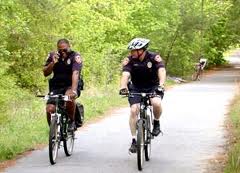
What we know is these crimes must stop.  A number of solutions have been proposed.  Durham police have purchased three utility terrain vehicles that will allow expanded patrol along the trail.  Police are using foot and bicycle patrols and in uniform and plainclothes along the trail. Civilian cameras have also been proposed.
Emergency call boxes will be installed if incidents continue.  It is estimated that boxes will cost in the $200,000 range, with additional cost for monthly phone connection charges.
Talk about reducing crime on the trail has resulted in a number of solutions that should solve the problem.  It’s difficult having similar talks about crime in areas with a high concentration of black and brown residents.  Crime on a trail is one thing.  Crime in a community is entirely different.
Be it the American Tobacco Trail, North East Central Durham or the Downtown Business District, the victims of crimes in all areas deserves to be heard.  Our response should not be limited by the tax bracket of those screaming to be heard. 
Its tough talking about crime, but someone has to yell when no one is listening. 


Wednesday, September 26, 2012

"The Brothers Size" shares the struggles black men face

I haven’t seen the play yet. I wanted to wait before writing about it, but I couldn’t hold back my excitement.  From all accounts, it’s worth the price of the ticket.  I’m certain I won’t be disappointed, but I’m hipped because it’s a play about black men.
The Brothers Size is on stage at the Manbites Dog Theater through September 29.  The play, written by Tarell Alvin McCraney, is a story of two black brothers, Ogun and Oshoosi Size.  It is set in the heart of Louisiana’s bayou, where Ogun owns a car repair business. Oshoosi, the younger brother, comes home from prison to live with Ogun.  He struggles to find work despite the inspiration of his brother.
It’s a story known too well by black men.  Finding employment after serving prison time is hard to endure.  Making matters worse is the arrival of Elegba, who Oshoosi met in prison.  Elegba tempts Oshoosi with promises of introductions to women.  Conflict is stirred between the brothers due to Ogun’s mistrust of Elegba.
Ogun, Oshoosi and Elegba are all named after gods of Yoruba, an African religion. Ogun is the god of tools and metal, Oshoosi is the god of the hunt and undertaker of quest and Elegba is the Yoruba trickster. 
The Brothers Size is the second part of McCraney’s The Brother/Sister Plays trilogy.  The first play, In the Red and Brown Wate,r was a huge hit from coast to coast. Like Brother Size, In the Red and Brown Water draws on folk tales from Yoruba mythology.
“This piece is really special to me because it's not often that you see such a powerful piece by a contemporary African American male playwright, featuring an all African American male cast,” says Chaunesti Webb. “And these guys are really amazing performers.”
Webb’s play, I Love My Hair When it’s Good: & Then Again When it Looks Defiant and Impressive, set a record for the greatest attendance numbers ever at the Manbites Dog Theater. “Manbites Dog Theater recognizes the emerging audience of African-American patrons who are interested in stories that are relevant, edgy and thought-provoking,” Webb says. “The work that Manbites Dog Theater does is an alternative to the Durham Performing Arts Center, reaching another segment of the Durham arts community, delivering a unique experience to downtown Durham.”
Durham is fortunate to have Webb and Howard Craft living and working in Durham.  Crafts recent play Nina Simone: What More Can I Say is another masterpiece among the rest of his works.  Those of us who love plays wait patiently for Webb and Craft to create something new.
In addition, Wendell Tabb, director of Theatre at Hillside High School, has been directing plays for 25 years.  Tabb has developed a theater department recognized as one of the best high school programs in the nation.  Throw in the work at the North Carolina Central University Drama Department, and Durham has become a hot spot for black theater.
The coming of The Brothers Size introduces Durham to great work created by black play writers from places outside of Durham.  Hopefully more will come.
I’m excited there’s a play about black men.  I was beginning to feel like an invisible man. 
Durham, open your arms to the real world of diversity.

Wednesday, September 19, 2012

Documentary on domestic violence raises need for prevention


It was a dream that felt like a reminder. I awoke feeling I had made a mistake. Have you ever had that feeling?

I was studying for a test at the University of Missouri.  As I went through my notes, I recognized an odd piece of paper with words scribbled in red ink.  “They need $15, 000,” the top of the note read.

What is that, I thought as I placed the note in a nearby book.  I continued my studies.  The clock was ticking.  My exam was set to begin in 35 minutes.

The dream fast forwarded to two years later.  I was sitting at my desk at WXLN Radio in Louisville, Kentucky.  I was placing books on a bookcase in my office when a note fell out from a book.  “They need $15, 000,” I began to read.  The rest woke me from my dream.  “by tomorrow or they will kill me.”

It felt real.  Had I failed to read a note that was slipped in between my class notes?  Was a life taken due to my oversight?  No, that couldn’t be, I thought after tussling in my bed way past the time I normally rise to begin my morning workout.

Was a life taken because I was too busy to read the note?  Have messages been sent that others overlooked because they were too busy preparing for a test?  My mind shifted to an email I received from Cynthia Hill, a Durham based documentary filmmaker. Hill and Kit Gruelle are working on a documentary film about domestic violence.  They have an indiegogo campaign with the goal of raising $15,000 to complete the film.

The film Private Violence hopes to raise awareness regarding the need for domestic violence prevention programs.  They want to stop the violence before it starts.  Reports of recent domestic violence homicides in Wake County brings to the forefront an issue that demands attention. 

“I was inspired to do a film because I've worked in the battered women's movement in North Carolina for 28 years and I grew tired of hearing the same, recycled, victim-blaming questions asked over and over again,” Gruelle says. “We are losing two women a week in North Carolina to domestic violence and our social/legal response/reaction is not dealing with it.”

Gruelle and Hill have been working on the film for five years.  Gloria Steinem is one of the executive producers.

“We have had a very hard time getting people to fund the film,” Gruelle says. “Mostly, it's because of the intense stereotyping that has allowed the issue to be narrowly-defined, so people think they can just brush it aside, but it truly affects everyone, directly or indirectly.”

The film addresses problems with North Carolina’s criminal justice system.  An example is a charge commonly used in domestic violence prosecutions called Misdemeanor Assault with a Deadly Weapon. This charge means that a woman can be shot or stabbed and, unless it involves a life-threatening injury, it will, more likely than not, be charged as a misdemeanor.

“But it is a felony to steal a bale of pine straw,” Gruelle says.

Gruelle says domestic violence is the giant, hidden social undertow that goes unmentioned or renamed.  “We have danced around this issue for decades,” she continued. “We have marched at vigils; we have attended funerals; we have released balloons; we have reacted to this crime, but Cynthia and I want to try to address the need for prevention. That's why Gloria Steinem got behind the film.” 

My dream felt like a memory.  “They need $15,000 by tomorrow, or they will kill me.”

Every year, Monica Daye, founder of Stand Up/Speak Out, holds a vigil to remember those killed as a result of domestic violence.  She calls me to read the names.  For the past five years, I have stood in the dark, surrounded by candles, while reading name after name.  I give their ages and weapon used. 

In some cases, I read the relationship with the murderer – husband, boyfriend, father, step-father, mother’s boyfriend.  It’s the same each year.  The list is a reflection of the general population.  Each race. All economic groups.  A broad range of ages.

Is the dream is a memory of those who cry from the grave?  “We needed you by tomorrow,” they scream from the tomb.  “You were too busy to read the rest of the note.”

They need money to get the message out.  The life of a woman depends on each of us. 

Is it a dream, or a memory? Does it matter?

Go to:

Friday, September 14, 2012

Black people don't know how to talk about race


Discussions about race are tough to have.  It’s cumbersome due to the massive assumptions placed on the table.  Navigating around it all forces all of us to keep the BS at the front door before sharing our views.
My last blog received a heated response from one of my readers.  He was offended with the generalization that white people don’t know how to talk about race.  He reminded me of the hard work and dedication of white people who sacrificed their lives for black people.  In other words, I’m not one of them.
My reader’s response proves my point regarding the difficulty in talking about race.  One has to be careful not to offend those who stand on the other side.  You can’t lump everyone in the same bag due to the exceptions to every theory.  My critic is correct to call me to task for over simplifying the issue.  With that being said, his response validates how hard it is for white people to talk about race.  You can’t do it unless you separate them from statements like the one I made.
I get it!  It’s difficult for me to hear certain criticisms when it comes to the work I do.  I hate listening to attacks against the Church for its homophobic ways.  Unlike my reader, I understand the truth in the claim, and view myself as an exception to the rule.  My life has been about fighting to overcome the massive stereotypes that restrict my work.  I’m constantly waving my hands and screaming “hey dude, I’m not like other black men.”
So, how do you talk about race without starting a war due to the terms used?  This is tough for me because of the long list of issues I have with white liberals.  As much as they claim to be on the side of black and brown people, many fail to understand how they use power and privilege to control the way we engage in overcoming things in the way of progress.  Without knowing it, white liberals have a way of using their race to diminish the progress of the people they claim to support.
I could say more about that, but doing so would only burn bridges.  Does moving forward mean remaining silent?  Does talk about race require no more talk about how it feels to be in the room with those who use race and privilege to their advantage without knowing they are playing that game?  What are the implications related to being challenged for sharing your feelings after being slapped on the hand for informing a person his words and actions make you feel like Sambo in the cotton field?
It may help for me to make a confession.  BLACK PEOPLE DON”T KNOW HOW TO TALK ABOUT RACE.  White people can’t talk about race due to the guilt raised when black people talk about it, and black people can’t talk about race because they don’t won’t to give the impression that they are unable to move forward due to a victim mentality.
Black people want to frame questions regarding race within the context of slavery, while white people would rather forget all that stuff that happened before they were born.  Black people are quick to assert that they haven’t been able to move forward due the re-institutionalization of slavery.  White people point to changes since slavery and beg black folks to get over what happened.
Those white liberals talk about pulling up bootstraps, while black people point to examples of racism today.  Black people keep marching after black boys are murdered and the rights of black people are denied.  Black people keep screaming “its racism,” while white people say “that’s a bad situation, but it doesn’t happen everywhere.”
White people point to the examples of success – look at Oprah, Barack, Colin, and Condoleezza.  Black people point to black men in prison, black children failing school and black people unable to find work.  Black people point to the disparity in the way banks decide on who gets a loan and how applications for employment are thrown out when the applicant’s name sounds black.
White people can’t talk about race because it makes them feel bad.  Black people can’t talk about race because it makes them feel hopeless. 
Maybe the answer is for black people to stop talking about the past.  The only problem with that is with how the past keeps repeating itself. 
I could shut up, but will that change the truth?

Wednesday, September 12, 2012

Why do white people hate talking about race?


On yesterday, I gave myself permission to relax and reflect on the state of America since that dreadful day – September 11, 2001.  So much has happened since that day.  We have our first black President.  We entered wars in Iraq and Afghanistan Troops are coming home, and Ben Laden is dead.
The days following the collapse of the World Trade Center united America like I’ve never seen.  American flags could be found everywhere, and the call for unity stirred a deep pride and hope in the declarations of our Constitution.  There was a movement beyond our differences.  Those who died that day represented the myriad of cultures that make for this amazing union.
I began to believe in America again.  That’s a statement that many have a hard time conceding.   What you mean again! We are quick to pronounce America as the best nation in the world.  Patriotism is not only expected, it is demanded.  Shame on anyone who challenges the U.S.A’s place as the best nation in the world. 
The aftermath of 911 brought a movement of change.  Enter the candidacy of Barack Obama.  Something was happening in America.  Like magic, the plight of the past was minimized for the collective good.  Black people could no longer talk about the implications of racism and the continued strain of those living with disadvantage.
Jeremiah Wright, former pastor at Trinity United Church of Christ, was attacked for what black preachers do.  He confronted the hypocrisy of America in a speech were he declared “God, damn America.”  It was a sermon that came after 911.  It was used to expose the radical ways of Wright and the allegiance between Obama and Wright.
The underlying assumption was Obama is too black to be America’s President.  After challenging the church Obama attended, it was rumored he’s not a Christian.  That was followed by questions regarding his citizenship.  People argued that Obama is a terrorist plant.
The insanity has intensified since Obama became America’s first black President.  White people now claim they are being discriminated against due to their race.  “Obama hates white people,” a man stated on NPR.  It’s a sentiment spoken in numerous camps.  People are tired of black people talking about race.
The use of the word black stirs the pot of hostility.  “Although I do not support Rev Wooden's position, objecting to his statement because he is a black minister is wrong,” AJW responded to my recent blog. “We should expect a better argument from you than that, just as we should expect better arguments from Blacks who support the president and from Whites to oppose him because of his color.”
According to AJW, it’s not appropriate to raise questions related to the changing culture among black ministers.  It is significant that a black pastor embraces a Republican agenda, but AJW refuses to concede the importance in pondering the shift.  Race, in his mind, shouldn't enter the conversation.  As insensitive as that may be, it’s not even the tip of the iceberg.
A student at Towson University is fighting to start a “White Student Union” on the campus.  Matthew Heimbach says the center will allow students to gather to support ideas of white people.  He wants a place that allows students a place to appreciate their history and heritage.
Heimbach was previously involved with an organization called Youth for Western Civilization, a group that placed messages of white pride across the Maryland campus. “When you have a group that calls themselves the White Student Union, their only purpose is generally hostility towards those who are non-white,” says Richard Vatz, professor at Townson University and a former advisor of the Youth for Western Civilization.
The point is, if black folks can have a center, we want one too.  Heimbach fails to understand the history behind culture centers is due to how history has been taken away and not taught in those history books. 
The thought fueling Heimbach’s agenda is a growing perception among white people.  They are tired of talking about racism.  Bob Parks has produced a video that asserts white people can’t criticize Obama without it being viewed as racist.   Check it out at: http://www.youtube.com/watch?v=AbULBAjstBA
Bob makes a good point.  It is possible to oppose Obama for reasons other than his race, but it’s also possible that people are against him because of his race?  It’s one of those things black people carry every day.  You never know the real reason behind not getting that big foot in the door.  It could be because the other guy or girl is more qualified. Or, it could be because of race.
“Man, ole dude checked ‘other’ in the box where they asked for his race,” I overheard a guy say at a bus stop.”  When he came in for the interview they saw he was a Nigger.  They said we will call you.  He’s been waiting for that call for 6 months.”
The two men laughed.  It wasn’t funny.  It could have been about race.
So much has happened since 911.  Some for the good.  Some for the bad.  Most of it is in flux.
One thing is clear.  White folks don’t like to talk about race.
Sorry, we need to have this talk.

Friday, September 7, 2012

Is is possible that black minister are being paid for the positions they take?


I almost ran my car off the road when I heard the ad,” Farad Ali told me during a recent conversation. “Everyone I spoke with said the same thing.”
It was the topic of heated discussion on Urban Radio in the Raleigh/Durham area.  Patrick Wooden, pastor of the Upper Room Church of God in Christ, challenged listeners to say no to Barrack Obama.  His pitch to kick Obama to the proverbial curb was enough to force the station to bring Wooden in studio to soothe the pain.
It’s not the first time Wooden has made comments that left folks saying “No he didn’t!” Back in June he said most gay men, when they get older, will be in diapers and using a “butt plug” to stop uncontrollable bowels caused by damage from anal sex. In another interview he said many gay men were going to the emergency room to have objects removed from their anuses.  He listed cell phones and baseball bats.
Wooden shared his insight into the sexual lives of gay men with references to “glory holes” and “fisting all way up to the armpit” He stated that God “made the human sperm, the God of the Bible designed it, and it was not designed to be emptied into an area that is filled with feces.”
In that same interview, Wooden contradicts himself by defending oral and anal sex for heterosexual.  He went on to say women are prone to have anal sex less due to having a vagina. 
Wooden has positioned himself as North Carolina’s poster boy against gay rights.  He fought against gay benefits for city workers in Raleigh, North Carolina.  He stood with other black ministers in support of Amendment One.  His radio ad took his mission to another level.  It exposed a truth that listeners were forced to face.  Wooden, and others like him, have become the champion for the Republican agenda.
In the ad heard on numerous Urban Radio stations, Wooden asked voters to say no to Barack Obama after the President supported gay marriage.  Many of those listening may have voted for the amendment that changed North Carolina’s constitution to define marriage as a union between a man and a woman.  Wooden won that fight, but pressing to end the reign of Obama was more than black folks can take.
The ad was paid for by the National Organization for Marriage. NOM gains its support from a small number of large anonymous donors.  In 2009, three donations of $2.4 million, $1.2 million and $1.1 million made up 68% of Now’s contributions of 7.1 million.  In 2010, five donations made up 75% of what was raised.
The Washington Independent reported that NOM received a $1.4 million donation from the Knights of Columbus that was not reported to the IRS. The Knights of Columbus is a charitable organization of the Catholic Church.
Fred S. Karger, candidate for the 2012 Republican nomination for President, has expressed the opinion that NOM is connected to the Church of Latter Day Saints.  Karger, who is openly gay, has worked on nine presidential campaigns and served as senior consultant to the campaigns of Ronald Reagan, George H.W. Bush and Gerald Ford.  He is gay rights activist.
Karger has pressed to know who is funding NOM.  Given many of the donations are anonymous; it’s tricky to follow the money.  Getting at the source of funding is important in understanding the motivation and meaning behind Wooden’s obsession against gay rights.  Not only is it important to address who is funding NOM, but even more important is uncovering if Wooden and other black minister are being funded for making a pitch against gay rights. If they are, who is behind that funding.
Is it possible that NOM is funded by the Koch Brothers? (see: http://www.newyorker.com/reporting/2010/08/30/100830fa_fact_mayer). If so, Wooden and others are being manipulated to support a mass movement to unseat Obama.  Wooden’s ad stated the case for removing Obama.  Gay marriage was used to make that case.  Knowing who funded the ad is an important question that needs to be answered by those who show up at Wooden’s church and pay tithes and offerings to support his anti-gay agenda.
No one can prove that black ministers are being paid.  We do know who paid for the ad featuring Wooden’s rant against gays.  Maybe the members at the Upper Room C.O.G.I.C don'tt care about the connection between Wooden and NOM.  If not, it’s a sad day for the black church.
Cuba Gooding said it best. “Show me the money!”

Wednesday, September 5, 2012

The state of black, progressive Christianity


“Reverend, there’s no such thing as a progressive black church,” my friend Johnny Ray Youngblood told me during a recent conversation.  “You have to make them progressive.”
Youngblood’s, pastor of Mt. Pisgah Baptist Church in Brooklyn, NC, analysis of the state of black faith came after I asked for guidance in finding a progressive black church to lead.  My journey in finding a new home to house my gifts has been a difficult one.  I’m discovering how rare it is to walk in these radical shoes.
“I’m dealing with the same struggle,” Melissa Harris-Perry told me after I asked her the same question.  Harris-Perry, host of the Melissa Harris-Perry show on MSNBC, used me as the subject of her book Barbershops, Bibles and BET: Everyday Talk and Black Political Thought.  Her book concludes that my struggles in Durham, NC are about my views related to human sexuality within the context of a conservative, black, Christian culture.
Harris-Perry and I share the mentoring of Jeremiah Wright.  Harris-Perry was a member at Trinity United Church of Christ while she taught at the University of Chicago.  Wright prayed with me and led me through the pain of two divorces and being terminated as pastor at the Orange Grove Missionary Baptist Church due to my radical views.  Wright’s approach to ministry was the model for transformative work before his message that damned America was released for the world to hear.
When Jeremiah Wright faced attacks for being too black and unpatriotic, people like me were forced to address the assumptions of our faith claims.  In one broad stroke, the assumptions of black, progressive thought dealt a blow for taking too seriously all that talk about social change.  Progressive ministers were harassed for upholding views that, in the minds of critics, failed to consider the meaning of the Bible.  We were forced to make adjustments that gave us a more conservative agenda, or face the possibility of being irrelevant due to our progressive views.
The shift away from a progressive, black faith agenda happened over night.  The blame for the change can be placed on the rise of the mega movement and television pulpits.  The driving force behind many ministries is to grow at all cost, rather than to make change for those left out.  The changing dynamics of black faith leave me bewildered with how, for the first time ever, the theology of the black church is driven by the views inherent in white, evangelical Christianity. 
It’s safe for me to acknowledge that my decision to end my work in Durham, NC is rooted in frustration with how black faith plays out in the Bull City.  The power and witness of black faith has been diluted by the need for those in leadership to both maintain their position and build a work that draws others to the church they lead.  Progressive views aren’t attractive among those who desire a faith that justifies their greed and endorses decisions to do whatever it takes to build personal success.
So, where is that place that affirms and needs progressive ministry ?  According to my friends, it doesn’t exist within the black church.  It takes people like me to make it happen, despite the desire to defeat efforts to communicate the faith in a way that challenges all systems that hinder freedom.  Sometimes the Church becomes that system that needs to be confronted.  Where are the ministers willing to place their own necks on the chopping block to defy those systems?
The conclusions can be frightening for a person like me.  Where do you go when no one wants to listen?  Is there a place for a voice like mine?  If not, what happens to those prophets who can’t find the valley filled with dry bones?  Where are the broken that need a word of comfort?  Where is the community with faith enough to stand against all forces of evil?
These are questions I’m addressing in the new book I’m writing.  Twisted Hope examines my own journey in becoming a progressive, black minister within a conservative culture.  It tells the stories of gay and lesbians who grapple with living their  faith among those who call them sinners.  It’s a book of stories – both theirs and my own – that hopes to shed light on the need for progressive leadership in the black church.
My hope is to complete this work as I seek a place to house my work in ministry.  The Rev-elution is on a new journey.  Hopefully, others will be inspired by the journey I take.  My commitment is to the work of God in me. The call can’t be compromised.  This is God’s work.  It doesn’t belong to me.
If not me, who? If not now, when?

Thursday, August 30, 2012

Traveling the freeway of change


Change is a strange thing.  It’s often the best thing that can happen, yet it is the hardest thing to approach.  Although it’s good to change, fear keeps us from moving toward the end to begin the journey toward something new.
On Sunday, I bring to an end 23 years of ministry in Durham.  Since making the announcement that I have chosen to disband Compassion Ministries, I’ve had numerous conversations with others in the middle of change.  There must be something in the air.  Each person spoke of the thrill of change while not being sure what will come next.
Change is a strange thing.
I spoke briefly with Steve Schewel about the change in his life.  Schewel, who serves as a member of Durham’s City Council, recently sold the Independent Weekly to Williamette Week, an alternative weekly paper in Portland, Ore.  Schewel ran the Independent Weekly for over 30 years.
Things have changed since the Independent Weekly first came off the presses.  The newspaper industry isn’t what it used to be.  It will never be the same.  I left my conversation with Schewel believing change was good for him.  He talked about being at peace.
Earlier that day, I ran into Sioux Watson, the publisher of the Independent Weekly.  She told me she won’t be around to run the Independent Weekly now that the paper has been sold.  She told me the change is a good thing.  Something new will come out of it all.
The changes at the Independent Weekly left me pondering all that it has meant for me to serve Durham over the years.  When I started working as a local column writer all the papers were locally owned.  The News & Observer was the first to be sold.  I’ll never forget the day the Herald-Sun was sold to the Paxton Media Group.  Many of my close friends were forced to leave without a chance to say goodbye.  I’ll never forget hugging Flo Johnston as she entered the elevator with her things in a box.
Change wasn’t good on that day.
The exit of many of my friends from the Herald-Sun led to the creation of the Durham News.  I stayed on board with the Herald-Sun until Bob Ashby, the managing editor, asked me to take a big pay cut.  I nicely told him no thanks and took my pen and paper to the Independent Weekly and the Durham News. 
The change wasn’t a bad thing.  It came with good and bad.  Change rarely finds you in a place that is the same. You have to learn to appreciate the good that comes with moving in a new direction.
So, what I’m trying to express is the feelings that come with my change.  Since 1997, my life has been a blending of column writer and pastor.  Throw in the pile a bunch of advocacy and activism and I’ve made a life that defines me in a way that leaves me feeling complete.  There’s nothing like walking in footprints that defines the things important to you.  I’ve been able to use the pen and the pulpit to dig deep while exposing the hypocrisy and contradictions that drive me crazy.
Back home, before coming to North Carolina, I used to talk about sharing the Good News and the bad news in the same week.  Back then I was working as a television reporter.  Things have changed since then, but many things are the same. 
That’s the good thing about change. Circumstance may alter, but we stay the same.  We may do work that is different – be it television, radio or newspaper, ministry or the world of nonprofit management – but we stay the same.  Our focus may differ. We may learn a few lessons that make us better at what we do.  We add a few new friends along the way to bring a different perspective, but the gut stays the same.
Knowing that grounds me in my decision to move toward change. Change does not mean a change in me. Change is about the beginning of movement toward something better in me.
Change is about celebrating magic.  Some call it faith – walking toward the unknown, knowing something better is there waiting for you to show up to marinate in the magic.
I can’t wait to see what will come next.  Like the leaves that come with autumn, I’m waiting for the wind to blow.  Imagine floating in the wind. Imagine going places you have never been before.
Yes, it gets scary sometimes, but I’m reminded of where I’ve been.  I’m taking the best of me with me as I travel toward discovering the gift of the new me.  I’m still the same, just a bit better because of the journey.
Thank God for change!

Wednesday, August 29, 2012

Rush Limbaugh wants Hurricane Isaac to kill black Democrats in New Orleans


Our friend Rush Limbaugh is at it again.  His recent comments sound like a curse to destroy black Democrats in New Orleans. Here’s what he said during a recent radio broadcast.
Thinking about what we can do to the Republican convention! I’m getting chills thinking about it! Now, if you missed the first hour, I, of course, Mr. Solution, El Rushbo, suggested that the Republicans head off some of this criticism that they know is coming their way by doing two things. First thing is send 500 bus drivers to New Orleans right now. Because, remember, it was Mayor Nagin of New Orleans who didn’t mobilize the buses to help evacuate the poor citizens.
Bush got blamed for it, of course, but it was the mayor who didn’t activate the buses. So we send 500 bus drivers in. The second thing we do: Instead of sending sandbags to shore up these levees, which have ostensibly been repaired since Katrina, we send in bags of money! We send in bags of money delivered by Mitt Romney’s sons. And we take those bags of money down to those levees.
We maybe even set one bag on fire just to show ‘em we’re Republicans. This will accomplish a couple things. A, it’ll show we care. “We have sent money directly to New Orleans, in bags at the levees.” The second thing that will happen is that citizens in New Orleans, when they find out there’s money in those bags, will head down there and try to steal the bags, steal the money, at which time the levees will fail because the bags are being taken away.
And more destruction, damage, and injury. In the process, the Republicans succeed in having fewer Democrat voters in Louisiana again. Just like they did with Hurricane Katrina. And everybody knows that was the point. Steer Katrina in there; wipe out New Orleans. Have the people that survive go to Texas and take Democrats away from Louisiana and make it not a Democrat state. That’s what the media told us Republicans did with Katrina. So relive it.
Those are my ideas
I don’t expect them to be acted upon.
But using bags of money would be cheaper than giving taxpayer dollars to the local Democrats who have been in charge of the levees, because that money has just ended up in the back pockets of the Democrats and didn’t go to levee repair. They used the money to buy votes, or in the case of William Jefferson (Democrat-Louisiana) he just put the money in his freezer.
Come on Rush! Using Katrina is a low blow.  I could write that Hurricane Isaac disrupting the Republican Convention is proof of God’s judgment against the Republican Party.  Isn’t that what many claimed after Hurricane Katrina ripped through New Orleans on this date (August 29) in 2005?  Hurricane Isaac offered an opportunity to give conservative minded Christians a piece of their own medication.
On September 18, 2006, Pastor John Hagee, who endorsed Senator John McCain for President, said he was glad to have told NPR’s Terry Gross that “Hurricane Katrina was, in fact, the judgment of God against the city of New Orleans.”
“New Orleans had a level of sin that was offensive to God,” Hagee went on to say.  “There was to be a homosexual parade there on the Monday that the Katrina came.”
Rushbo’s comments come after a series of offensive statements regarding how God uses natural disasters to expose sin.  Pat Robertson used his bully pulpit to attack the victims of Katrina.
"I was reading, yesterday, a book that was very interesting about what God has to say in the Old Testament about those who shed innocent blood…But have we found we are unable somehow to defend ourselves against some of the attacks that are coming against us, either by terrorists or now by natural disaster? Could they be connected in some way?" Robertson said in a September 12, 2005 broadcast of "The 700 Club," soon after Hurricane Katrina.
Robertson used the tragic earthquake in Haiti to make another point about God’s judgment. "They were under the heel of the French. You know, Napoleon III, or whatever. And they got together and swore a pact to the devil. They said, we will serve you if you'll get us free from the French. True story. And so, the devil said, okay it's a deal [...] ever since, they have been cursed by one thing after the other."
Couldn’t we claim that God is angry with the greed and deception among Republicans?  If God used natural disaster to make a point in New Orleans and Haiti, can’t the same apply to Republicans in Florida to nominate Romney?
Limbaugh seems obsessed with Hurricane Isaac. Earlier in the week he blamed Democrats for altering the forecast to force a cancellation of the first day of the convention.  He then asserted Democrats want Hurricane Isaac to hit New Orleans. Now, he rekindles reminders of Katrina with a dream of killing poor black folks to reduce the number of Democrats in New Orleans. If I didn’t know any better, I would say ole Rushbo is doing his best to stay away from talk about God opening eyes to Republican sin.  I don’t think he’s smart enough to recognize the contradiction. 
He shifts the blame for what happened after Katrina away from President Bush to Mayor Nagin knowing the blame for what happened has many layers.    Katrina is too painful a memory to use to make a silly point.  What would people think if Rushbo suggested boxes of fried chicken be placed on top of a building in New York city to trick black Democrats to go on top on the anniversary of 911.  It is no laughing matter.
So, if we’re going to use natural disasters to make a point, try this. 
God is using Hurricane Isaac to kill the top leaders in the Republican Party.  It’s God’s judgment for years of racism, sexism and greed.
I don’t believe that’s true, but it’s the type of crap those Republicans use to manipulate their base.
God help us!